NEW QUESTION 39
Your company will soon start moving critical systems Into Oracle Cloud Infrastructure (OCI) platform. These systems will reside in the us-phoenix-1and us-ashburn 1 regions. As part of the migration planning, you are reviewing the company’s existing security policies and written guidelines for the OCI platform usage within the company. you have to work with the company managed key.
Which two options ensure compliance with this policy?
Block Volume Encryption
By default all volumes and their backups are encrypted using the Oracle-provided encryption keys. Each time a volume is cloned or restored from a backup the volume is assigned a new unique encryption key.
You have the option to encrypt all of your volumes and their backups using the keys that you own and manage using the Vault service.If you do not configure a volume to use the Vault service or you later unassign a key from the volume, the Block Volume service uses the Oracle-provided encryption key instead.
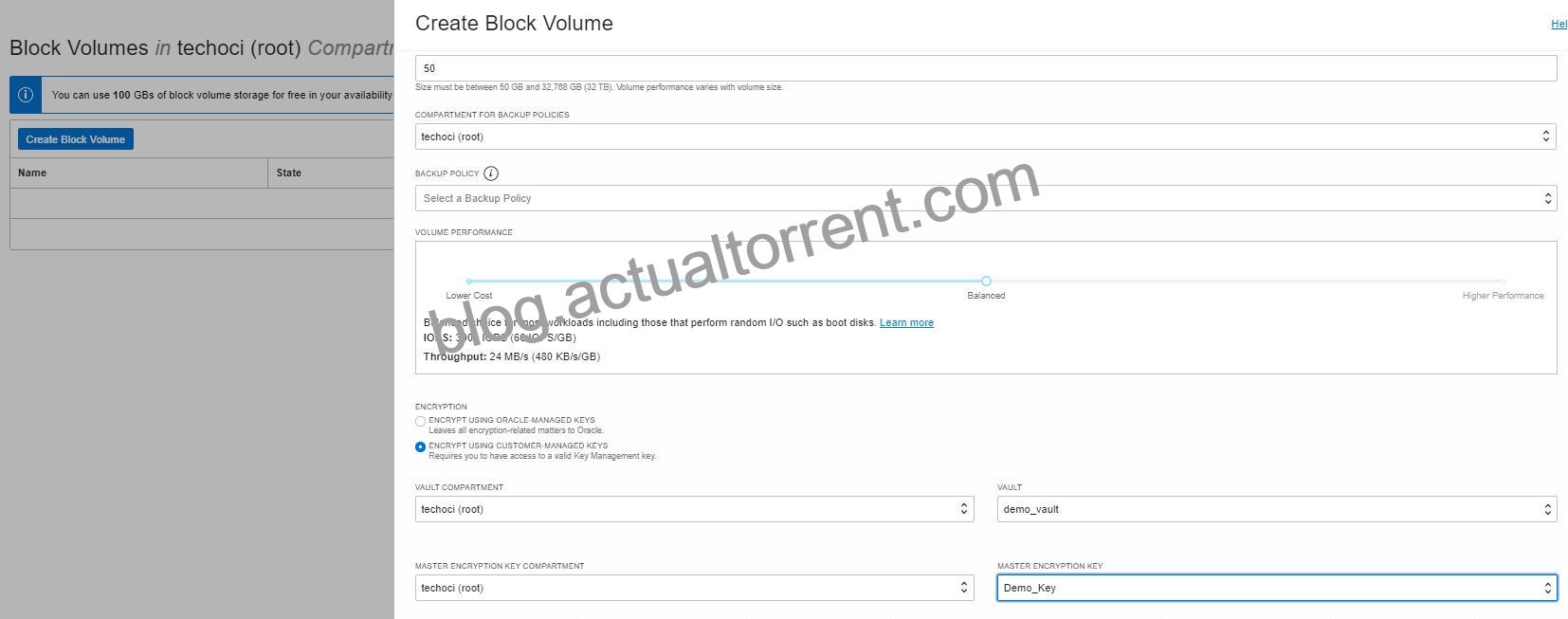
This applies to both encryption at-rest and in-transit encryption.
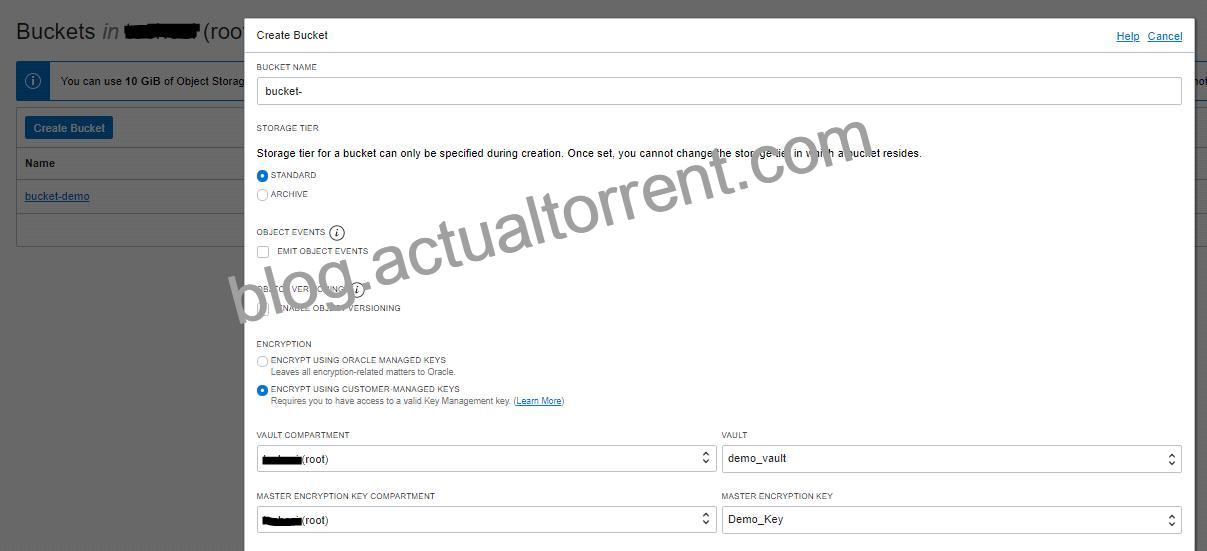
Object Storage Encryption
Object Storage employs 256-bit Advanced Encryption Standard (AES-256) to encrypt object data on the server. Each object is encrypted with its own data encryption key. Data encryption keys are always encrypted with a master encryption key that is assigned to the bucket. Encryption is enabled by default and cannot be turned off. By default, Oracle manages the master encryption key. However, you can optionally configure a bucket so that it’s assigned an Oracle Cloud Infrastructure Vault master encryption key that you control and rotate on your own schedule.
Encryption: Buckets are encrypted with keys managed by Oracle by default, but you can optionally encrypt the data in this bucket using your own Vault encryption key. To use Vault for your encryption needs, select Encrypt Using Customer-Managed Keys. Then, select the Vault Compartment and Vault that contain the master encryption key you want to use. Also select the Master Encryption Key Compartment and Master Encryption Key.
NEW QUESTION 44
A global media organization is working on a project which lets users upload their videos on their site. After upload is complete, the video should be automatically processed by an Al algorithm. The algorithm will try to recognize actions in the videos so that it can be used to show related advertisements in future. The development team wants to focus on writing Al code and don’t want to worry about underlying infrastructure for high-availability, scalability, security and monitoring.
Which OCI services should you recommend for this project?
Oracle Functions is a fully managed, multi-tenant, highly scalable, on-demand, Functions-as-a-Service platform. It is built on enterprise-grade Oracle Cloud Infrastructure and powered by the Fn Project open source engine. Use Oracle Functions (sometimes abbreviated to just Functions) when you want to focus on writing code to meet business needs.
The serverless and elastic architecture of Oracle Functions means there’s no infrastructure administration or software administration for you to perform. You don’t provision or maintain compute instances, and operating system software patches and upgrades are applied automatically. Oracle Functions simply ensures your app is highly-available, scalable, secure, and monitored. With Oracle Functions, you can write code in Java, Python, Node, Go, and Ruby (and for advanced use cases, bring your own Dockerfile, and Graal VM). You can then deploy your code, call it directly or trigger it in response to events, and get billed only for the resources consumed during the execution.
You can create automation based on state changes for your Oracle Cloud Infrastructure resources by using event types, rules, and actions. When the function is executing inside the container, the function can read from and write to other resources and services running in the same subnet (for example, Database as a Service). The function can also read from and write to other shared resources (for example, Object Storage), and other Oracle Cloud Services.
NEW QUESTION 49
You are working as a cloud consultant for a major media company. In the US and your client requested to consolidate all of their log streams, access logs, application logs, and security logs into a single system.
The client wants to analyze all of their logs In real-time based on heuristics and the result should be validated as well. This validation process requires going back to data samples extracted from the last 8 hours.
What approach should you take for this scenario?
The Oracle Cloud Infrastructure Streaming service provides a fully managed, scalable, and durable storage solution for ingesting continuous, high-volume streams of data that you can consume and process in real time. Streaming can be used for messaging, ingesting high-volume data such as application logs, operational telemetry, web click-stream data, or other use cases in which data is produced and processed continually and sequentially in a publish-subscribe messaging model.
Streaming Usage Scenarios
Here are some of the many possible uses for Streaming:
Metric and log ingestion: Use the Streaming service as an alternative for traditional file-scraping approaches to help make critical operational data more quickly available for indexing, analysis, and visualization.
Messaging: Use Streaming to decouple components of large systems. Streaming provides a pull/bufferbased communication model with sufficient capacity to flatten load spikes and the ability to feed multiple consumers with the same data independently. Key-scoped ordering and guaranteed durability provide reliable primitives to implement various messaging patterns, while high throughput potential allows for such a system to scale well.
Web/Mobile activity data ingestion: Use Streaming for capturing activity from websites or mobile apps (such as page views, searches, or other actions users may take). This information can be used for realtime monitoring and analytics, as well as in data warehousing systems for offline processing and reporting.
Infrastructure and apps event processing: Use Streaming as a unified entry point for cloud components to report their life cycle events for audit, accounting, and related activities.


Be the first to reply